
A classic can be done properly or not at all. Here are a few things worth knowing before you bring us yours.
Properly or not at all
A classic that has been done properly will never pay for itself and will never turn a profit. That is why you restore a classic for yourself, to enjoy it, and not to drive it for a week and sell it at a profit.
We say this at the start because everything else depends on it: the scope of work, the budget and the patience. Anyone counting on a quick profit usually starts saving in places nobody sees, and those are the places that show up later on the road.
A classic does not have to be seventy years old or museum-grade. To us, a 1991 Spider is one just as much as an old Giulietta from the 1950s. Both get the same care, because the way we build a car does not depend on what it fetches in the classifieds.
Market values do not interest us. So we will not advise anyone on whether it makes sense to put €20,000 into restoring a Spider that can later be sold for €10,000. We can tell you what needs doing for the car to be done properly. Whether it is worth it is for the owner to judge.
No deadlines
With classics there are no completion dates. We can say roughly that an engine rebuild will take a month or two, but we cannot guarantee it will not stretch to ten, if only because of problems that may come up at our subcontractors. We would rather say so plainly than promise a date no honest workshop could keep.
In most cases, after all, we are dealing with a pile of metal that has 30, 40 or even 50 years of work behind it, several owners and a mileage known only to itself. Only once it is taken apart do you see what really needs doing, and sometimes a problem is so well hidden that it only shows up during reassembly.
Bargains from America
We are not moved by tales of classics brought over from America for the price of a used city car that only need “a little tidying up”. A perfect classic for next to nothing is a pipe dream. Such a car is usually 40 years old and shows the mileage of an average new car after two years on the road, while its condition is closer to a heap of scrap.
By some strange coincidence, low-mileage Spiders from America always come with a dead speedometer and a butchered, damaged instrument cluster as well. There is no mystery to it: an odometer wound back by an amateur usually ends up with a broken speedometer. We have three of those to our name already.
Myths we fight
Old cars are surrounded by myths. We hear them from customers all the time:
- Hard starting, uneven running and hesitant acceleration are simply what “old” engines do.
- Knocks, play and wandering on the road are normal, because that is just how suspension worked back then.
- A whining rear axle and a noisy driveline are part of the period charm, so there is nothing to worry about.
- An old engine is weak and sluggish by nature, and nobody will ever find its catalogue horsepower again.
- An old engine has to leak oil, and a puddle under the car just proves there is still some left in the sump.
- A creaking dashboard, squeaking seats and rattling doors just show the car’s age.
- Crunching gear changes and gears that are hard to engage are a feature of old gearboxes.
The idea of comfort has changed little over the years. A car from the 1970s had to meet much the same expectations as one built today. It may have been louder because it had less sound insulation, it may not have soaked up bumps quite as well, but it certainly had no play in the suspension and no oil pouring out of the engine.
A properly restored classic drives smoothly, brakes with confidence and leaves no stains on the driveway. If it does not, that is not period charm, it is a fault.
“It turns over and doesn’t knock”
Another myth: if the engine turns over and does not knock, everything is fine and you can set off for the seaside. Sadly, no.
Engines that stand for a long time usually develop surface rust on the cylinder bores. Started up after a long lay-up, they damage the bores and compression begins to drop fast.
Then there are the bearings, which simply corrode with age. Old oil oxidises and turns acidic, and it absorbs moisture too. The acidic by-products of oil breakdown and the water attack the bearing alloys, lead and copper in particular. In an engine that sits for years on old oil, the bearings deteriorate without it covering a single kilometre.
That is why an engine that has stood for years should not be started “just to see” before someone has looked inside.
Suspension and brakes age too
The same goes for the suspension and the brakes. Through age alone, these components are no longer fit for use. The rubber in suspension parts goes soft or cracks. The same applies to caliper seals and to the flexible brake and clutch hoses.
Master cylinders, clutch slave cylinders and wheel cylinders have a limited life too. Brake fluid is hygroscopic, so it draws in water. The water causes corrosion inside the cylinder, pitting appears and the unit is scrap, because it cannot even be reconditioned.
How we work
We stick to a simple rule: look after it as if it were your own, do the job as you would for yourself, and commit to the work. Mostly we get the hardest cases, often ones that look hopeless. Jobs can take two or three times longer than we planned, but they are done properly.
Before we start putting a car back together, we agree with the owner what the end result should be: what stays factory and what is to be changed. Changing the concept during assembly means taking apart what has already been fitted, which means extra time and cost.
We document every restoration and report progress as we go. We use the Motowarsztat workshop system and a Google Drive folder that holds the whole extensive gallery: before, during and after the work.
We bill for the actual hours worked, stage by stage, and each statement comes with time sheets and photographs. Parts and outside services are ordered once a deposit has been paid, and subcontractors’ invoices are passed on with no mark-up.
What we do ourselves
We handle the mechanical side of a restoration: engine, gearbox, suspension, brakes, electrics. We rebuild carburettors, starters and alternators, and we restore wiring looms to factory condition, from scratch if need be, with original connectors.
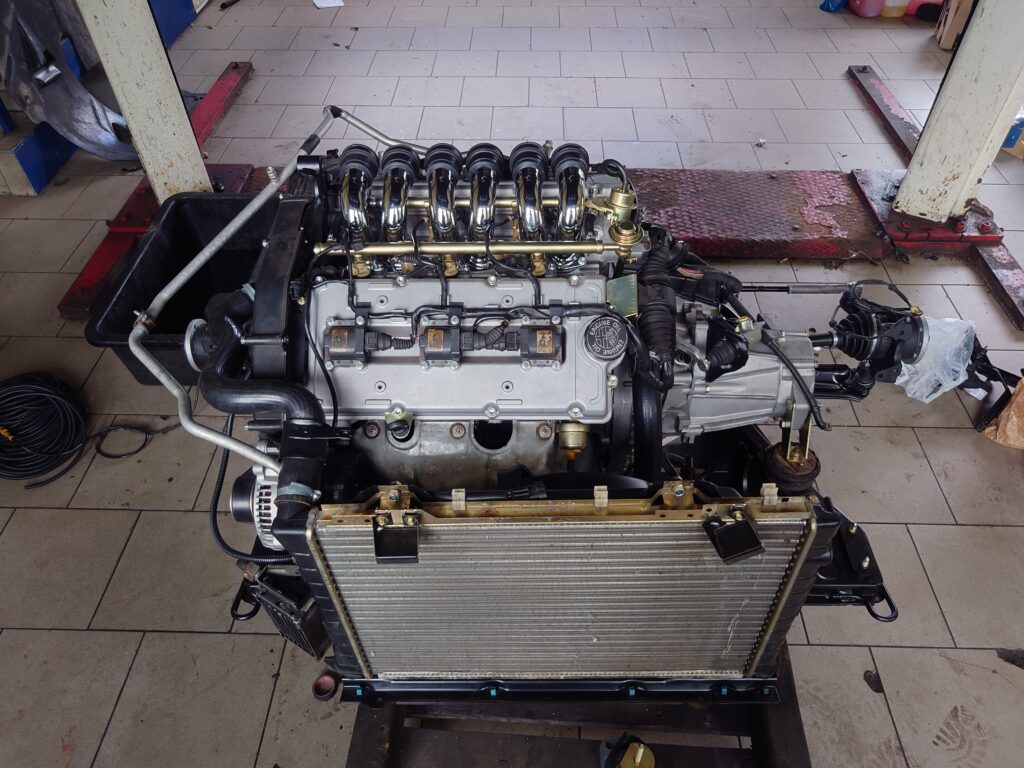
For the demanding, we offer the Factory-Look package, which gives classic engines their factory appearance back.
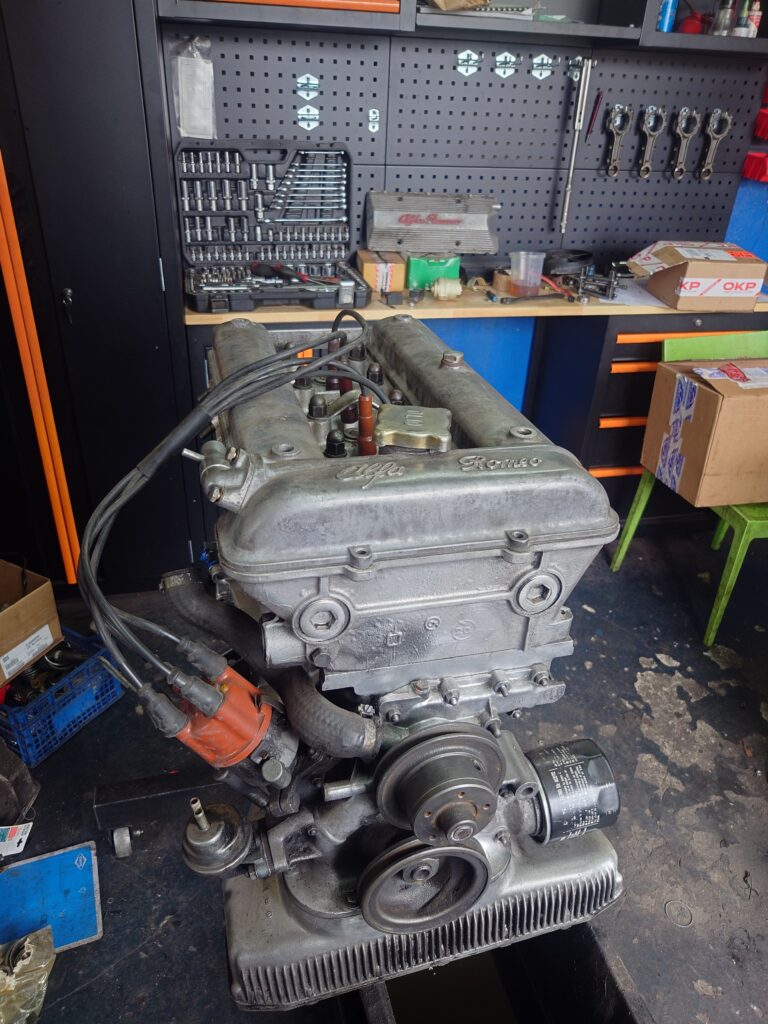
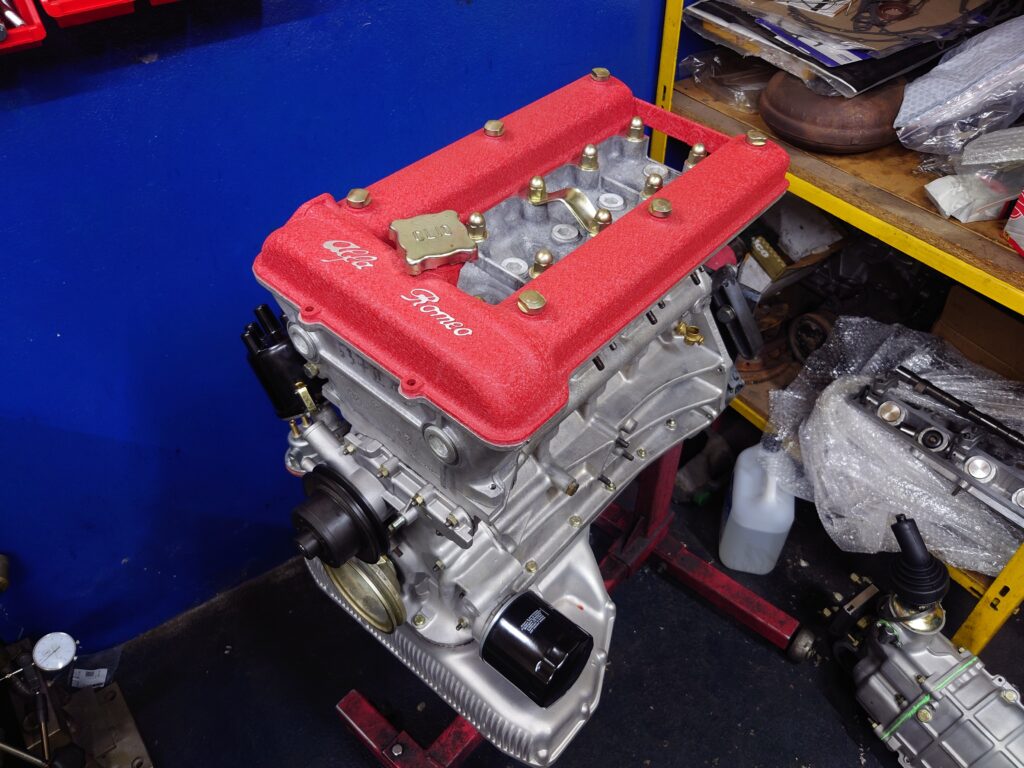
What we send out, and how we tie it together
We do not do paintwork, bodywork or upholstery ourselves. Machining of heads, blocks and crankshafts, glass-bead blasting, powder coating, plating and caliper reconditioning go to trusted specialist shops.
On full projects we manage the whole job: we keep the stages in order, move the parts around and check what comes back from the subcontractors. The owner has one point of contact instead of five.
You will find the details on the Services page.